
Search results: 3992

Ethics deals with the principles of ethical behavior in modern society both in personal and societal level and in interaction with the environment and other shared resources (CMO 20 s 2013).
The course attempts to lay the grounding principles of ethics by leading students in the analysis of human experience and linking to the elements of ethical dimension.
It also introduces and equips students with the various classical ethical frameworks such as utilitarianism, natural law, deontology and virtue ethics where each frameworks embed set of values for students to examine. The course guides students through the analysis and evaluation of the strengths and weaknesses of the various ethical frameworks and their value to human life and society for the purpose of enabling them to make informed moral decisions and judgments on significant moral concerns.
- Teacher: Felipe Nantes
- Enrolled students: 50
This course aims to integrate the four –year religious formation of the students through selected activities and accompanying reflections bridging the missionary values of compassion, integrity, and service with their practicum experiences in Health and Natural Sciences Courses. Because this course will coincide with the semester/s during which the students will be doing their practicum, and because the practicum experiences form part of the materials for the students’ reflections, the Religion teacher will have to coordinate some activities and some relevant matters with the teacher in charge of the students’ practicum.
- Teacher: JUDITH DAGUIO
- Enrolled students: 67
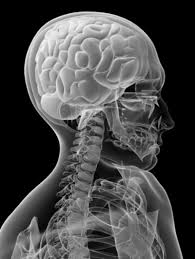
This course covers the application of motor control and learning concepts and principles to exercise, sports and dance. The student should be able to skillfully break down various movement skills and devise relevant strategies to enhance the acquisition of motor learning for students. The learner of this course should be able to utilize their potential student’s movement competencies to progress into more complex activities.
- Teacher: RONDA NAVALTA
- Enrolled students: 11
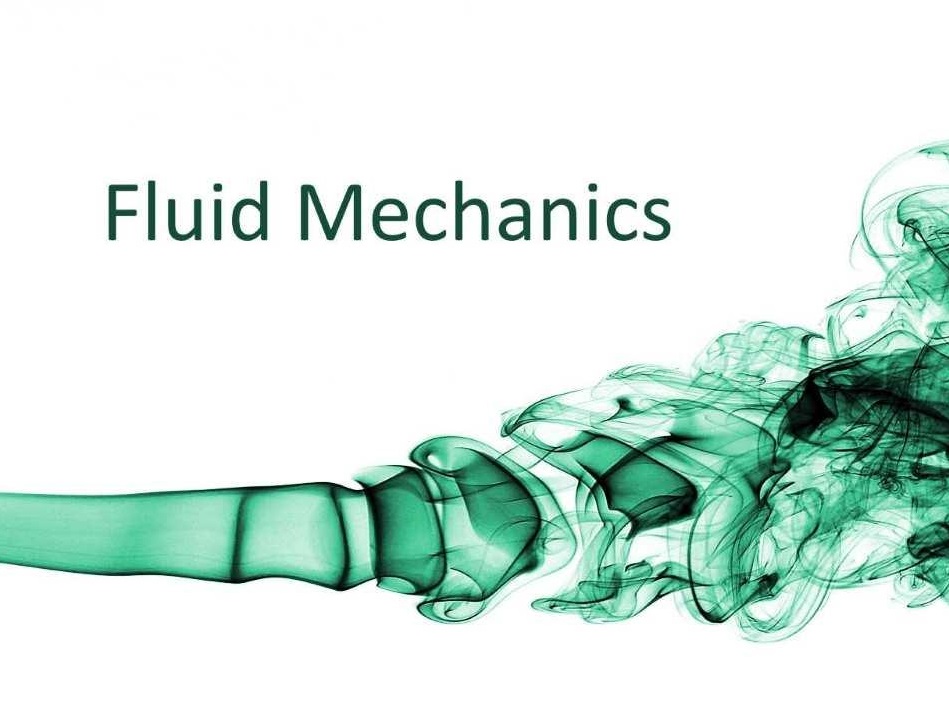
This course deals with a comprehensive introduction on Newtonian mechanics and the science of fluids (liquids and gases). It discusses aerodynamics – the study of air and gases in motion and hydrodynamics – the study of liquids in motion. It discusses principles relating speed, pressure and forces particularly Bernoulli and Pascal’s principles. It allows the students to gain knowledge of how this topic is applied to activities and solve practical problems.
- Teacher: CESAR MEDULA JR.
- Enrolled students: 4
- Teacher: RONDA NAVALTA
- Enrolled students: 9

The course explores the fundamental principles, processes and practices anchored on learner-centered and other educational psychologies as these apply to facilitate various teaching-learning delivery modes to enhance and reinforce learning.
- Teacher: LIBERTY ROSARIO
- Enrolled students: 29
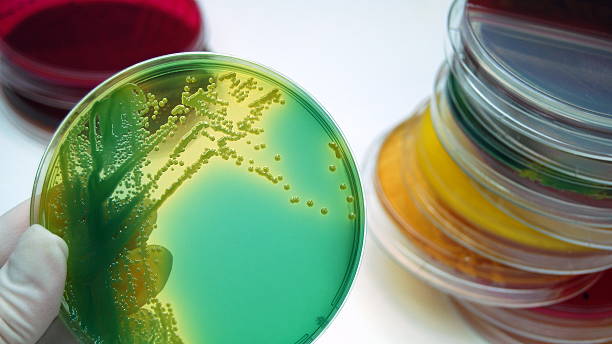
This course is designed to assist students in the study of important microorganisms and parasites. It explains the physiologic and pathogenic properties of bacteria, fungi and viruses as an introduction to disease causation, their biology, the infections they cause, host responses to these infections and their mode of transmission, prevention, and treatment.
The laboratory experience provides specimen collection, handling and processing of specimens for isolation and identification of microorganisms and parasites involved in the infectious processes.
- Teacher: RHODORA UY
- Enrolled students: 3
This course covers principles in human information processing in relation to the development of motor skills. The student should be able to apply structure, present and evaluate effective learning situations when teaching human movement.
- Teacher: RONDA NAVALTA
- Enrolled students: 6

This course is designed to assist students in the study of important microorganisms and parasites. It explains the physiologic and pathogenic properties of bacteria, fungi and viruses as an introduction to disease causation, their biology, the infections they cause, host responses to these infections and their mode of transmission, prevention, and treatment.
The laboratory experience provides specimen collection, handling and processing of specimens for isolation and identification of microorganisms and parasites involved in the infectious processes.
- Teacher: RHODORA UY
- Enrolled students: 3

- Teacher: LIBERTY ROSARIO
- Enrolled students: 3

This course begins with an introduction to the nature of Mathematics as an exploration of patterns (in nature and the environment) and as an application of inductive and deductive reasoning. By exploring these topics, students are encourage to go beyond the typical understanding of Mathematics as merely a bunch of formulas but as a source of aesthetics in patterns of nature, for example, and a rich language in itself (and of Science) governed by logic and reasoning.
The course then proceeds to survey ways in which Mathematics provides a tool for understanding and dealing with various aspects of present day living, such as managing personal finances, making social choices, appreciating geometric designs, understanding code used in data transmission and security, and dividing limited resources fairly. These aspects will provide opportunities for actually doing mathematics in a broad range of exercises that bring out the various dimensions of Mathematics as a way of knowing, and test the students’ understanding and capacity. (CMO No. 20, series of 2013)
- Teacher: Domingo Guntalilib
- Enrolled students: 35

Diskripsiyon ng Kurso
Ang Kursong Kontekstwalisadong Komunikasyon sa Filipino ay isang praktikal na kursong nagpapalawak at nagpapalalim sa kontekstwalisadong komunikasyon sa wikang Filipino ng mga mamamayang Pilipino sa kani-kanilng komunidad sa partikular, at sa buong lipunang Pilipino sa pangkalahatan. Nakatuon ang kursong ito sa makrokasanayang pakikinig at pagsasalita, gayundin sa kasanayan sa paggamit ng iba't ibang tradisyonal t modernong midya na makabuluhan sa kontekstong Pilipino sa iba't ibang antas at larangan.
- Teacher: LEILANIE CRISTIE SAGABAEN
- Enrolled students: 49
![6438 64<span class="highlight">7</span>8 2:30MW Physical Activity Towards Health and Fitness (Sports) (FIT Sp [6438] BS Psych 2) Merged with FIT Sp [64<span class="highlight">7</span>8] BS SocWor 2](https://lms.smu.edu.ph/pluginfile.php/194106/course/overviewfiles/sports%201.png)

This course may be described as SPORTS SKILLS activities. It pertains to various activities with special kind of skill particularly needed in playing of highly organized games which are governed with rules and regulations such as Individual/Dual Sports and Team Sports. The emphasis is the development of a certain degree of expertise in the organization, officiating, playing and scheduling of these games depending on one’s needs, interest and aptitudes. It also helps/enriches students for proper adaptation of time particularly scheduling of games during a tournament in the school or in their community or locality.
- Teacher: RONDA NAVALTA
- Enrolled students: 47

6438 (MCode) & 6478 1:30 MTh Physical Activity Towards Health and Fitness (Sports) 2nd Sem SY 21-212
This course may be described as SPORTS SKILLS activities. It pertains to various activities with special kind of skill particularly needed in playing of highly organized games which are governed with rules and regulations such as Individual/Dual Sports and Team Sports. The emphasis is the development of a certain degree of expertise in the organization, officiating, playing and scheduling of these games depending on one’s needs, interest and aptitudes. It also helps/enriches students for proper adaptation of time particularly scheduling of games during a tournament in the school or in their community or locality.
- Teacher: RONDA NAVALTA
- Enrolled students: 56

- Teacher: RONDA NAVALTA
- Enrolled students: 54
This course deals with the application of chemistry in the identification, examination of physical evidence includes study of blood, semen and other body fluids, gunpowder, explosives, hair and textile fibers, chemical aspect of document examination, problems of glass fragments and glass fractures, moulage, metallurgy, and petrography as applied to crime investigation, and solutions of legal problems.
- Teacher: Shiellah Mae Barsicula
- Enrolled students: 35

This course deals with the application of chemistry in the identification, examination of physical evidence includes study of blood, semen and other body fluids, gunpowder, explosives, hair and textile fibers, chemical aspect of document examination, problems of glass fragments and glass fractures, moulage, metallurgy, and petrography as applied to crime investigation, and solutions of legal problems.
- Teacher: Shiellah Mae Barsicula
- Enrolled students: 35
- Teacher: Reiner Dulawan
- Enrolled students: 43
- Teacher: SUSAN Galamay
- Enrolled students: 34