Search results: 3992

This course focuses on the core concepts and techniques for entering the international marketplace. Emphasis is on the effect of sociocultural, demographic, economical, technological and political-legal factors in the foreign trade environment. The course illustrates the unique nature of international business including the patterns of world trade, currency exchange, and international finance, globalization of the firm, international marketing, and operating procedures of the multinational enterprise. It demonstrates how international business variables affect the trade process. It highlights the realities of international business; some of its advantages and its problems that come when business is conducted on the international stage. Finally, the course studies the world trading system, including the World Trade Organization and International Trade Agreements.
- Teacher: DORILYN TIONGSON
- Enrolled students: 47
- Teacher: DORILYN TIONGSON
- Enrolled students: 53

This course emphasizes on the foundational concepts in the study of Christian Morality. It reflects more deeply on moral actions rooted and guided by the Ten Commandments, Catholic Social Teachings and the renewed vision of life and love as taught and exemplified by Jesus Christ for the fulfillment of the Kingdom of God. In the midst of a plurality of moral issues and concerns in our time affecting the human person, family, ecology, and the society in general, this course seeks to answer what a meaningful life is in the light of the Christian faith and how the teachings of Jesus Christ be integrated into one’s own life choices and decisions in response to God’s offer of life and love – salvation, through an authentic Christian moral life and actions.
- Teacher: Felipe Nantes
- Enrolled students: 47
- Teacher: Diwata Donato
- Enrolled students: 50

Ethics deals with the principles of ethical behavior in modern society both in personal and societal level and in interaction with the environment and other shared resources (CMO 20 s 2013).
The course attempts to lay the grounding principles of ethics by leading students in the analysis of human experience and linking to the elements of ethical dimension.
It also introduces and equips students with the various classical ethical frameworks such as utilitarianism, natural law, deontology and virtue ethics where each frameworks embed set of values for students to examine. The course guides students through the analysis and evaluation of the strengths and weaknesses of the various ethical frameworks and their value to human life and society for the purpose of enabling them to make informed moral decisions and judgments on significant moral concerns.
- Teacher: Felipe Nantes
- Enrolled students: 38
- Teacher: CLARISSA CUTARAN
- Enrolled students: 49

The student will develop knowledge, skills and values on the basic principles of personal hygiene, food safety and sanitation as applied in tourism and hospitality industry. Topics included the following: compliance with workplace hygiene procedures, establishment and maintenance of a safe and secure workplace. Implementation of occupational health and safety procedures and performing basic first aid procedures.
(CMO No. 62 Series of 2017 pg. 50 and 51)
- Teacher: JOHN MICHAEL IBARRA
- Enrolled students: 35
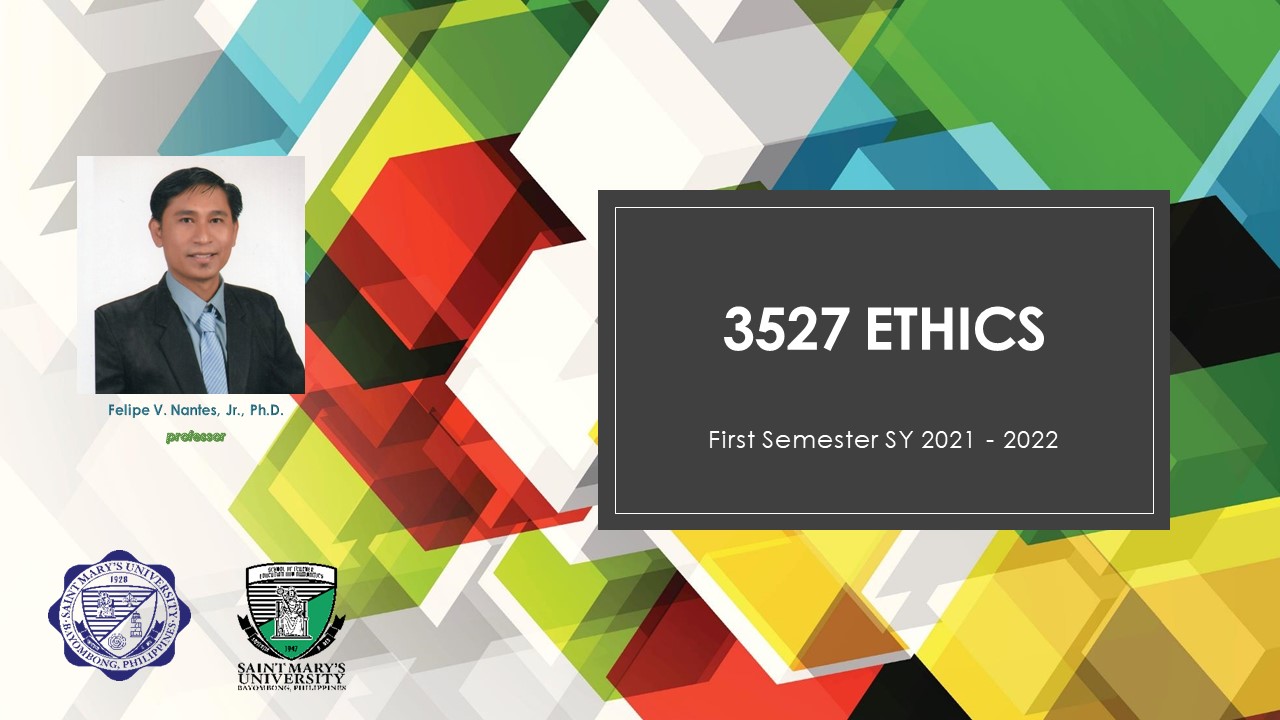
Ethics deals with the principles of ethical behavior in modern society both in personal and societal level and in interaction with the environment and other shared resources (CMO 20 s 2013).
The course attempts to lay the grounding principles of ethics by leading students in the analysis of human experience and linking to the elements of ethical dimension.
It also introduces and equips students with the various classical ethical frameworks such as utilitarianism, natural law, deontology and virtue ethics where each frameworks embed set of values for students to examine. The course guides students through the analysis and evaluation of the strengths and weaknesses of the various ethical frameworks and their value to human life and society for the purpose of enabling them to make informed moral decisions and judgments on significant moral concerns.
- Teacher: Felipe Nantes
- Enrolled students: 52

PATH FIT 1 offered to college students provides knowledge on health and fitness activities. Part 1 presents legal bases that discusses why it is part of the curriculum. It also introduces the concept of Physical Education and of fitness and its relevance to wellness development and culminates with fitness testing. Part II deals with movement enhancement that involves the understanding of scientific basic movement and specific movement patterns. Health education and importance of nutrition are also included. Part III consists of Exercises Program that starts from warm-up exercises to cool-down exercises. Part IV deals with Aerobic exercise activities. These activities exert low to high intensity of movement exercises accompanied with music which test student’s endurance, power, and flexibility in all action. With these variety of skills, one will be more knowledgeable as to how continued fitness be achieved throughout one’s lifetime
- Teacher: RONDA NAVALTA
- Teacher: Judy Ann Pocquias
- Enrolled students: 41

The student will develop knowledge, skills and values on the basic principles of personal hygiene, food safety and sanitation as applied in tourism and hospitality industry. Topics included the following: compliance with workplace hygiene procedures, establishment and maintenance of a safe and secure workplace. Implementation of occupational health and safety procedures and performing basic first aid procedures.
(CMO No. 62 Series of 2017 pg. 50 and 51)
- Teacher: JOHN MICHAEL IBARRA
- Enrolled students: 42

- Teacher: LYSEL HALOC
- Enrolled students: 41
- Teacher: ROBERT ACERET
- Enrolled students: 39
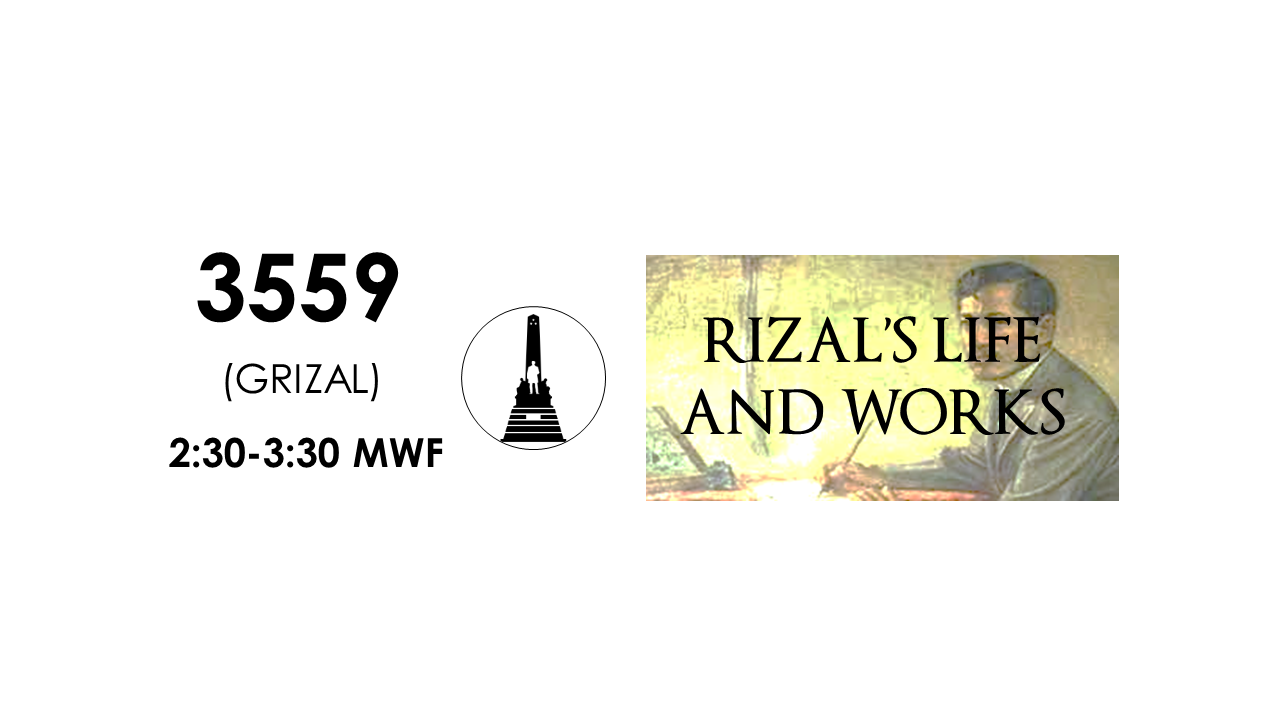
This course is a study of life, works and writings of Dr. Jose Rizal, the country’s foremost national hero. Included in the course are his significant thoughts, ideas, novels, poems and essays which had a profound impact in his development as a person and as a hero and how these noble and lofty thoughts raised the national consciousness of the Filipinos. Pivotal in the lessons are discussions of his nationalistic aspirations.
As mandated by Republic Act 1425, this course covers the life and works of the country's national hero, Jose Rizal, Among the topics covered are Rizal's biography and his writings, particularly the novels Noli Me Tangere and El Filibusterismo, some of his essays, and various correspondences.
- Teacher: Diwata Donato
- Enrolled students: 40

Applied Business Technologies focuses on integrating advanced software features commonly used in business. This course is designed for students interested in learning about collaboration, digital communication, and customization of presentation software to create, edit, and manage business documents, using advanced features of word processing, spreadsheet, and database applications. Topics also include multimedia elements such as creating and manipulating images, graphics, videos, and animations. Applied Business Technologies is designed to improve students’ transferable skills, which will increase their success in the business world.
- Teacher: Windell Marie Colobong
- Enrolled students: 31

Applied Business Technologies focuses on integrating advanced software features commonly used in business. This course is designed for students interested in learning about collaboration, digital communication, and customization of presentation software to create, edit, and manage business documents, using advanced features of word processing, spreadsheet, and database applications. Topics also include multimedia elements such as creating and manipulating images, graphics, videos, and animations. Applied Business Technologies is designed to improve students’ transferable skills, which will increase their success in the business world.
- Teacher: Windell Marie Colobong
- Enrolled students: 6
- Enrolled students: 20

The course introduces students to the knowledge and skills necessary to food styling techniques and to make the food look attractive in the finished photograph. Topics include the areas of hot and cold foods, location and studio setups, and advertising and editorial differences. The workings of the food studio and the interaction between photographer and food stylist are presented through lecture and laboratory demonstration. The main difference between how a home cook or chef may present food and what a stylist does is the time and effort a stylist takes to carefully and artfully arrange the food. Also required is the visual know how, and ability to translate the perception of taste, aroma and appeal that one gets from an actual dish, to a two-dimensional photograph.
COURSE
LEARNING OUTCOMES Upon completion of this
course the student should be able to: ·
Composition for food styling, and design ·
Using different ornaments,
garnish, sauces and cooking techniques for food styling and design ·
Composition of food
presentation with photography ·
Using backgrounds in food
photography. Android/smart mobile phone photography techniques ·
Best practices for lighting,
food photography ·
Shooting on location for food
photography ·
Special equipment needed for food
photography ·
Various markets places for
food photographers ·
Working with a food stylist,
the relationship ·
Understanding food prep for
photography ·
Create professional quality
food photography ·
Presentation of work to the
food photography industry
- Teacher: JOHN MICHAEL IBARRA
- Enrolled students: 33
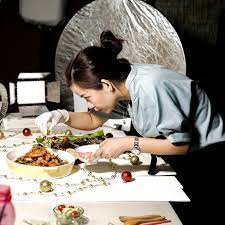
The course introduces students to the knowledge and skills necessary to food styling techniques and to make the food look attractive in the finished photograph. Topics include the areas of hot and cold foods, location and studio setups, and advertising and editorial differences. The workings of the food studio and the interaction between photographer and food stylist are presented through lecture and laboratory demonstration. The main difference between how a home cook or chef may present food and what a stylist does is the time and effort a stylist takes to carefully and artfully arrange the food. Also required is the visual know how, and ability to translate the perception of taste, aroma and appeal that one gets from an actual dish, to a two-dimensional photograph.
COURSE LEARNING OUTCOMES
Upon completion of this course the student should be able to:
· Composition for food styling, and design
· Using different ornaments, garnish, sauces and cooking techniques for food styling and design
· Composition of food presentation with photography
· Using backgrounds in food photography. Android/smart mobile phone photography techniques
· Best practices for lighting, food photography
· Shooting on location for food photography
· Special equipment needed for food photography
· Various markets places for food photographers
· Working with a food stylist, the relationship
· Understanding food prep for photography
· Create professional quality food photography
· Presentation of work to the food photography industry
- Teacher: JOHN MICHAEL IBARRA
- Enrolled students: 33